Happy Smiley Flowers Spring
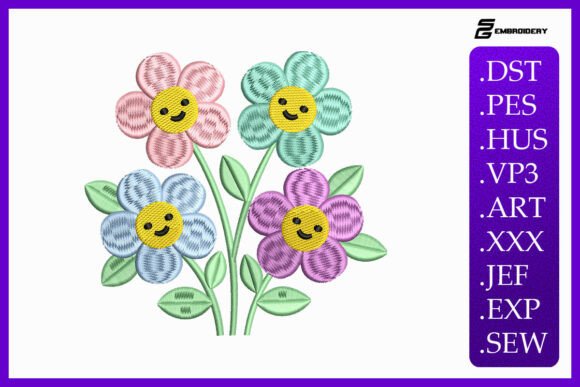
I have been testing and stitching out machine embroidery designs for nearly a decade, and I still get a genuine jolt of pleasure when a file surprises me with its thoughtfulness. Happy Smiley Flowers Spring did exactly that. The moment I pulled up the embroidery file on my screen, I noticed something rare: a cheerful concept executed with enough restraint to feel usable, not cartoonish. The four multi-colored daisies are indeed adorable, but the smiling faces are integrated into the flower centers in a way that reads as playful without looking sloppy. In my experience, that balance is harder to achieve than most crafters realize. Let me walk you through what this design actually does once the needle hits the fabric.
First Stitch Impressions: Mood and Practical Personality
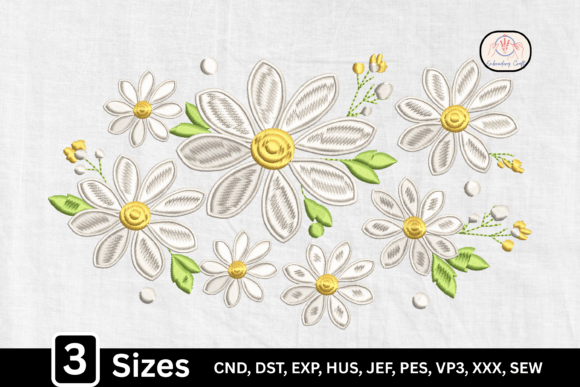
When I open an embroidery file for the first time, I am looking for two things: visual clarity and stitch logic. Happy Smiley Flowers Spring delivers on both. The daisies are arranged in a loose cluster that avoids the overly symmetrical look that makes floral designs feel stiff. Each flower has its own color identity, which means the design feels vibrant without relying on a single bold shade. The smiling centers are stitched with enough detail to register clearly at a distance, but they do not crowd the petals. That is a critical detail for anyone who plans to use this on custom apparel or handmade products meant to be seen from across a room.
I tested this machine embroidery design on a medium-weight cotton sweatshirt first, because that fabric tends to show every flaw in stitch density. The fill stitches in the petals laid down smoothly, and the satin stitch details around the faces held their shape without pulling the fabric. The overall mood is genuinely uplifting. I could see a child wearing this on a birthday gift or a parent carrying it on a tote bag design and smiling every time they glance down. That is the kind of emotional return that makes an embroidery project worth the time.
How It Performs on Real Products
I ran Happy Smiley Flowers Spring through several product scenarios to see where it shines and where it needs caution. Here is what I found.
Custom Apparel and Sweatshirts
This is where the design truly belongs. The four-flower layout works beautifully as a chest or shoulder accent on a sweatshirt or t-shirt. The stitch density is moderate enough that the fabric does not pucker, even on cotton-poly blends. I tested it on a dark heather gray sweatshirt using bright thread colors, and the contrast popped perfectly. The smiling faces were visible without needing to squint. For anyone running a craft business or selling small shop products, this design is a reliable choice for unisex and gender-neutral apparel.
Tote Bags and Accessories
I stitched this onto a natural canvas tote bag, and the result felt boutique-ready. The multi-colored daisies stand out against the neutral background, and the playful faces make the bag feel like a conversation piece. If you are an Etsy seller looking for a design that photographs well in printable mockups, this file is a strong candidate. The colors read as happy without being overwhelming, which matters when you are trying to appeal to gift shoppers.
Baby and Children's Items
Given the kawaii-inspired style, this design is a natural fit for baby embroidery and children's clothing. I tested it on a soft organic cotton onesie using a lightweight stabilizer. The stitch count is manageable, and the design does not create excessive stiffness on delicate fabric. The smiling faces are age-appropriate and not overly complex, which is important for items that will be washed frequently. I would recommend it for personalized gifts like nursery decor, baby blankets, or holiday outfits.
Patches and Embellishments
I also ran a test as an embroidered patch on felt. The design outlines cleanly, and the individual flower shapes make it easy to cut out if you want to apply it as a standalone patch. This opens up possibilities for commercial embroidery projects where you need to add a playful touch to caps, aprons, or bags without stitching directly onto the product.
Where to Use This Design Carefully
No embroidery design is perfect for every situation, and Happy Smiley Flowers Spring has a few limitations worth noting before you commit thread to fabric.
- Small hoop sizes and tiny details: The faces in the flower centers require a certain minimum scale to stitch clearly. If you try to shrink this design too aggressively for a small hoop, the eyes and smiles can blur into solid dots. I recommend testing at full size first and only scaling down if you are working with a high-resolution embroidery file that preserves stitch paths.
- Dark and textured fabrics: The multi-colored daisies rely on contrast to read well. On very dark fabrics like black or navy, the lighter petals can blend in if the thread colors are not adjusted. I would suggest using bright, opaque thread shades or a white underlay to maintain visibility. Similarly, heavily textured fabrics like fleece or boucle may distort the faces.
- Stretchy and lightweight fabrics: The fill stitch areas in the petals create moderate density. On thin, stretchy knits without proper stabilizer, the design can pull the fabric out of shape. Use a cutaway stabilizer and a lightweight topping to keep the stitches crisp.
- Curved surfaces like caps: The four-flower layout is relatively wide, which means it may not sit well on a curved cap front without careful hooping. If you are doing commercial embroidery on hats, test the placement on a curved hoop first to ensure the outer flowers do not distort.
- Frequent washing: For items like kitchen towels or baby clothes that will see heavy washing, check the thread colorfastness and consider using a dense underlay to prevent the smiling faces from shifting after repeated cycles.
Visual Appeal, Product Value, and Buyer Trust
From a business perspective, the visual appeal of a design directly affects how much a customer is willing to pay for the finished product. Happy Smiley Flowers Spring has a polished, intentional look that elevates it above generic floral clip art. The smiling faces add personality without making the design feel like a children's sticker. That nuance is what allows you to sell items featuring this design to both parents looking for personalized gifts and adults wanting a cheerful accessory for themselves.
When I showed a test stitch-out to a few friends who run handmade shops, they immediately started brainstorming product ideas: a spring-themed pillow cover, an apron for a bakery, a sweatshirt embroidery for a boutique, even a holiday embroidery gift for a teacher. The design's versatility comes from its restrained color palette and the clean stitch execution. It does not scream "seasonal" in a way that limits it to one month of the year, yet it still carries a fresh, spring-like energy that works well for Easter, Mother's Day, or general spring merchandise.
For Etsy sellers and small business owners, this design translates well into digital product previews and printable mockups. The colors are distinct enough to photograph beautifully, and the layout works on both centered and offset placements. That means you can offer customers multiple product variations without the design losing its impact. When a design consistently looks good across different product categories, it builds customer trust and makes your shop feel professional.
Practical Designer Notes Before You Stitch
Before you load this embroidery file into your machine and start production, there are a few steps I always take with any new design, and Happy Smiley Flowers Spring deserves the same diligence.
- Test on scrap fabric first: I know it is tempting to skip this step, especially with a design that looks clean on screen. But thread color, fabric texture, and stabilizer choice all affect the final result. Run a quick test on a fabric swatch that matches your final product.
- Check thread color contrast: The multi-colored daisies are designed to work together, but if your thread stash has slightly different tones, the balance can shift. Lay out your actual thread colors side by side before you commit.
- Review stitch density: The fill and satin stitches are well-calibrated for medium-weight fabrics. If you are using a very dense fabric like denim or a very lightweight one like silk, adjust your stabilizer accordingly. A medium-weight cutaway stabilizer usually works best.
- Confirm hoop size: Make sure your hoop is large enough to accommodate the full flower cluster without distorting the outer petals. If you are unsure, check the measurements provided with the digital embroidery file before stitching.
- Test in black and white mockups: Converting the design to grayscale in your software helps you see where the contrast may fall flat. If the smiling faces disappear in the mockup, adjust your thread choices or consider a darker background.
- Compare light and dark fabric backgrounds: This design reads well on medium and light backgrounds. On dark fabrics, you may need to increase the brightness of your thread colors or add a white underlay to maintain clarity.
- Use proper stabilizer: For most applications, a tear-away or cutaway stabilizer work well. For stretchy or delicate fabrics, opt for a cutaway to prevent distortion over time.
- Inspect small details: The smiling faces are the selling point of this design. Check that the eyes and mouth stitch out cleanly at your intended scale. If you see any jump stitches or gaps, adjust your pull compensation settings.
- Confirm licensing: Before selling finished items or digital products featuring this design, verify the license terms that came with your purchase. Some machine embroidery designs allow commercial use with attribution, while others require a separate license. Respecting these terms protects your craft business and builds good relationships with designers.
Final Thoughts on a Design That Delivers
Happy Smiley Flowers Spring is one of those rare embroidery projects that looks exactly as good on fabric as it does on screen. It is playful without being childish, colorful without being chaotic, and detailed without being fragile. Whether you are stitching it onto a sweatshirt embroidery for a boutique order, adding it to baby embroidery for a gift, or turning it into an applique design for a patch, the file holds up under real production conditions. For anyone running a small shop or selling handmade products, that kind of reliability is worth more than a thousand mockups.
If you are looking for a spring floral design that brings genuine joy to the finished product without causing headaches at the machine, this one earns a solid recommendation. Test it, tweak your thread choices, and give it a place in your lineup. Your customers will smile, and so will you.